
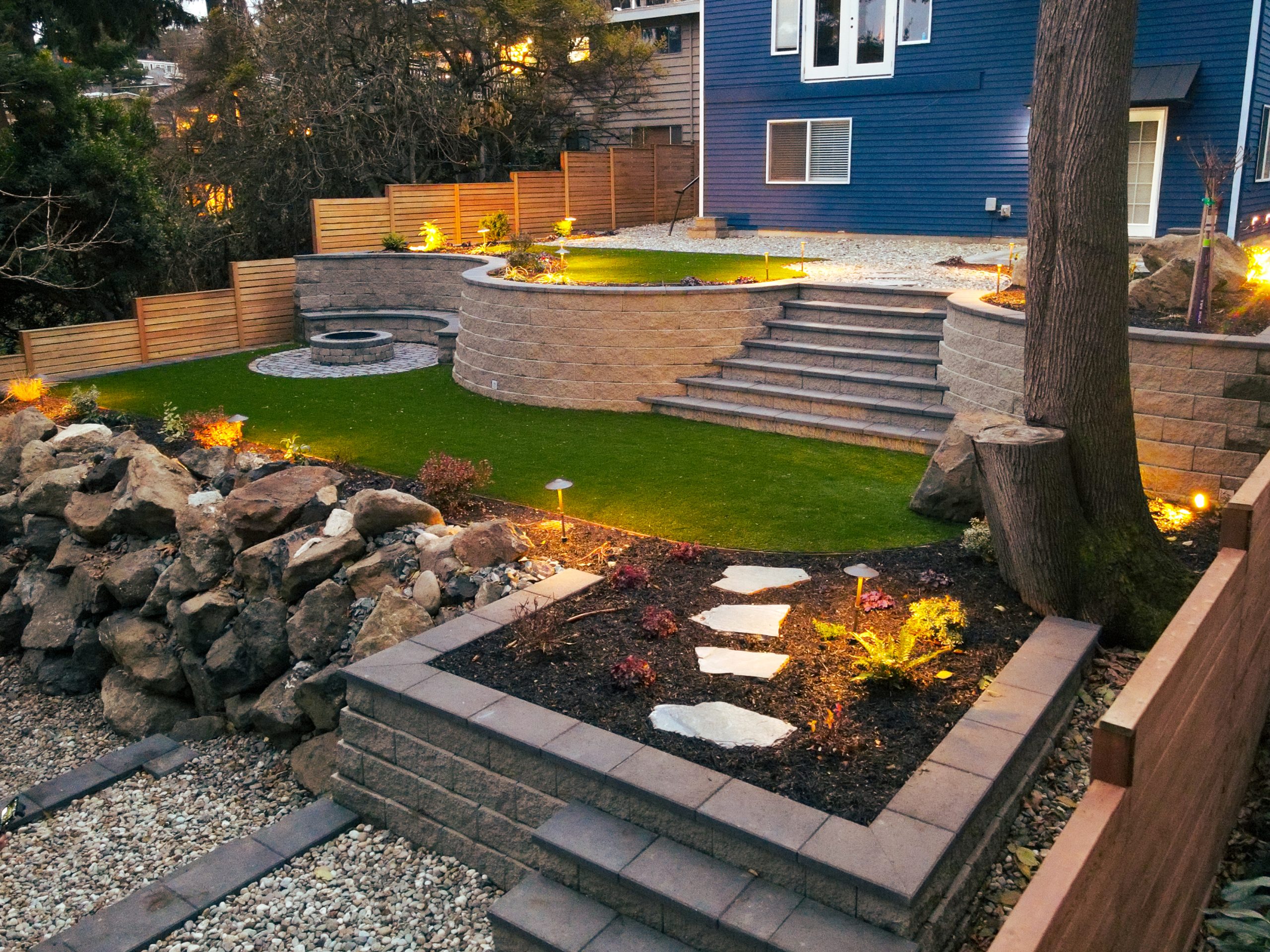
Creating beautiful outdoor lighting changes your yard into a magical space at night. We consider factors such as brightness, color warmth, and light angles to enhance the appearance of nature. Observing natural features and measuring the sizes of spaces enables us to create customized lighting plans for each yard. Sustainable landscape design principles guide our choices when picking the right fixtures – from pathway lights to spotlights – to add depth and character to outdoor areas.
Understanding the Basics of Lighting Design
Learning the basic rules helps create an effective landscape lighting design. Lighting design does more than just illuminate outdoor spaces – it creates mood and showcases your landscape’s beauty. Knowing these basics helps you get balanced and attractive results. First, consider why you need lighting – for safety, aesthetics, or practical purposes. Then learn about different types of lights, such as path lights, spotlights, and wash lights, and where to place them for the best effect. Consider brightness, color warmth, and beam width to create the ideal mood in your outdoor space. Learning these basics sets you up for a successful landscape lighting project.
Assessing Your Outdoor Space
Start by examining natural features, such as trees, bushes, and building details. Check the size of your area and what catches the eye. See how different spaces get used – for eating, relaxing, or walking. Note any obstacles or safety issues you need to work around. Check the location of electrical outlets and ensure they are not too close to where you want the lights. Examine your ground surfaces, such as grass, gravel, or decking, to understand how light will bounce off them. Think about what mood you want – cozy, dramatic, or practical. By carefully considering all these factors, you can create a lighting plan that makes your outdoor space both visually appealing and functional.
Selecting the Right Lighting Fixtures
Selecting the right lighting fixtures involves considering both their functionality and aesthetic appeal to enhance your Outdoor Space. Start by deciding what the lighting needs to do: provide security, highlight special features, or create a warm atmosphere. Choose fixtures that are well-suited for weather conditions and use less energy to last longer and save money. Path lights help guests walk safely along walkways, while spotlights can show off trees or building features. Wall lights add style to your patio or deck, and string lights make cozy, personal spaces. By carefully selecting the right lighting fixtures, you can transform your outdoor area into an attractive and welcoming space.
Planning Your Lighting Layout
When planning your lighting layout, think about these key points:
- Highlight focal points: Identify key features, such as trees, building details, or pathways, that you want to showcase.
- Create layers of light: Use a mix of task, mood, and accent lighting to add depth and interest to your outdoor space.
- Ensure proper spacing: Place fixtures strategically to avoid excessive or insufficient light in areas, aiming for balanced and pleasing lighting.
Incorporating Different Lighting Techniques
Experiment with various lighting methods to enhance the design and functionality of your landscape lighting system. Uplighting creates drama by highlighting building features or trees, adding depth and dimension to the scene. Downlighting works great for soft light and reducing glare. Path lighting keeps people safe and guides guests along walkways, while shadowing adds depth and interest to your outdoor space. Moonlighting involves placing lights high in trees to replicate the moon’s natural glow, emitting soft and romantic light. Silhouetting puts a light source behind objects to create bold outlines. By combining these methods effectively, you can transform your outdoor area into an appealing and welcoming space.
Maintenance and Upkeep Tips
Regular maintenance keeps your landscape lighting system functioning properly for years. To keep your outdoor lights shining bright, follow these important tips:
- Clean Regularly: Remove dirt, leaves, and spider webs from fixtures and covers to prevent blockages and keep lights bright.
- Check Connections: Inspect wires and connections for signs of wear or damage to prevent potential problems or safety risks.
- Seasonal Adjustments: Adjust light direction, timers, and brightness according to the seasons to enhance visibility and mood throughout the year.
Related Posts: