
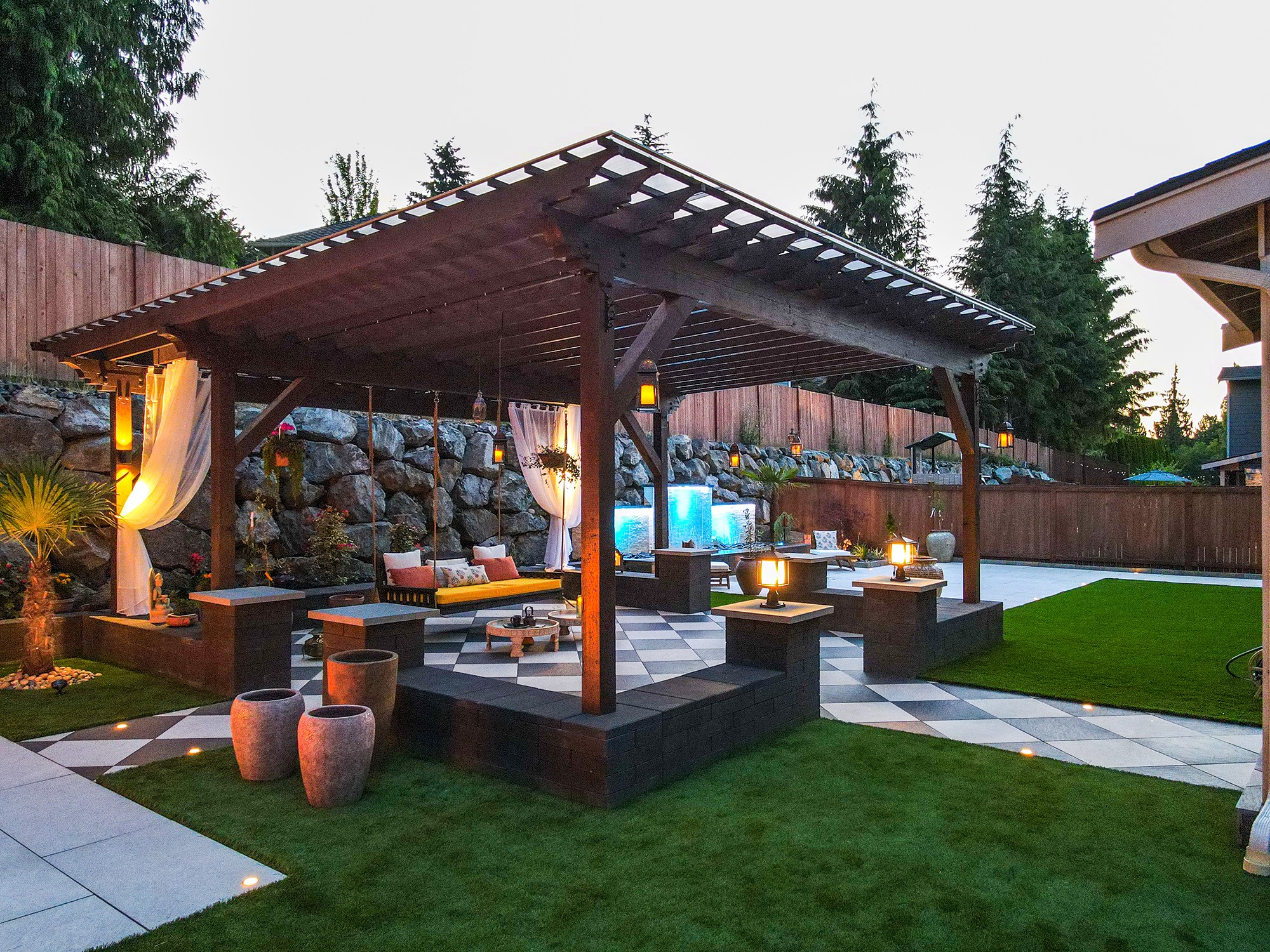
Outdoor kitchens have transformed from luxury add-ons to essential features in custom landscape design. They’re no longer just about grilling—they’re about creating functional outdoor living spaces where families gather, entertain, and make memories. If you’re planning an outdoor kitchen in Seattle, thoughtful design decisions early in the process will save you time, money, and frustration down the road.
An outdoor kitchen extends your home’s living space into the landscape, but only when it’s designed with intention. At Angkorscape, we’ve helped countless homeowners in Seattle and Western Washington transform their backyards into resort-style outdoor environments. Here are three essential tips to consider before you break ground.
1. Plan for Seamless Design Flow
Your outdoor kitchen shouldn’t feel like an afterthought or disconnected structure. It needs to flow naturally from your home’s interior while defining its own space within the landscape.
Start by considering sightlines. How will you move from your indoor kitchen to the outdoor one? Is there a clear path that makes sense when you’re carrying food, dishes, or drinks? The transition should feel effortless, not awkward or inconvenient.
A well-planned outdoor kitchen creates a natural extension of your home’s interior spaces.
Think about how the outdoor kitchen relates to other areas of your backyard. Will it anchor a patio space? Does it need to connect to a dining area or fire pit? Creating defined zones within your landscape helps each area serve its purpose without feeling cramped or isolated.
When we work on custom landscape design projects in Seattle, we use detailed 3D renderings to help homeowners visualize exactly how spaces connect before construction begins. This planning phase is where you’ll catch potential flow issues—like a grill positioned where smoke blows toward seating areas, or counters that block views of the yard where kids play.
Consider Seattle’s Climate
Seattle’s weather patterns matter when planning outdoor kitchen placement. You’ll want some protection from rain during spring and fall, but you’ll also want to take advantage of those perfect summer evenings. Think about:
- Covered structures or pergolas that provide weather protection without feeling closed-in
- Strategic placement that takes advantage of natural wind patterns
- Southern or western exposure to maximize warmth and sunlight
- Proximity to indoor spaces for those months when Seattle weather is unpredictable
A landscape architect in Seattle understands how local climate conditions impact outdoor space functionality. We incorporate these considerations during the design phase so your outdoor kitchen works well year-round, not just during peak summer months.
2. Choose Appliances Based on How You’ll Actually Use the Space
It’s easy to get caught up in the excitement of planning and want everything—pizza ovens, smokers, built-in grills, refrigerators, sinks, and more. But the best outdoor kitchens are designed around how you actually live and entertain, not a fantasy version of outdoor cooking you might never use.
Ask yourself honest questions about your lifestyle:
- Do you host large gatherings frequently, or are most meals with immediate family?
- What type of cooking do you actually enjoy? Are you a grilling enthusiast, or do you prefer the convenience of quick meals?
- Will you use this space year-round or primarily during warmer months?
- What indoor appliances do you use most, and would outdoor versions make sense?
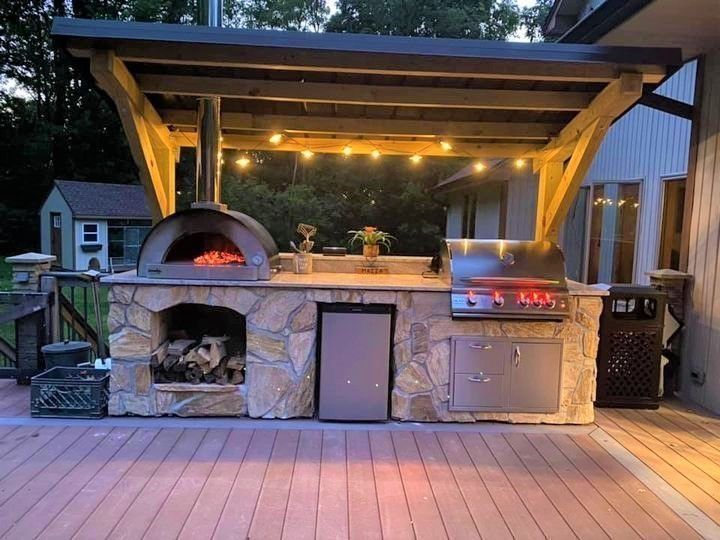
Select appliances that match your cooking style and entertainment needs.
Essential vs. Optional Features
Most functional outdoor kitchens include these basics:
- Primary cooking surface: Usually a built-in grill, but could be a smoker or outdoor range depending on preferences
- Counter space: You need room for food prep, plating, and staging—more than you think
- Storage: Cabinets or drawers for utensils, seasonings, and supplies keep everything accessible
- Refrigeration: A small outdoor fridge eliminates constant trips inside
Popular upgrades that add functionality:
- Sink with running water: Makes cleanup easier and allows for food prep outdoors
- Pizza oven: Great for families who love homemade pizza and bread
- Warming drawers: Keep food at the right temperature during extended meals
- Ice maker: Convenient for entertaining but not essential for everyone
During the design phase, we help clients prioritize features that deliver the most value for their specific needs. You can always add elements later, but removing or relocating built-in appliances after construction is expensive and disruptive.
Material Selections Matter
Seattle’s wet climate requires durable materials that hold up to moisture without constant maintenance. Stainless steel appliances resist rust better than cheaper alternatives. Natural stone or concrete countertops handle weather exposure well when properly sealed. Avoid materials that trap moisture or require frequent refinishing.
3. Integrate Smart Features and Sustainable Design
Once you’ve nailed down the basics, thoughtful additions can transform a good outdoor kitchen into an exceptional one. These features enhance functionality without adding unnecessary complexity.
Lighting Design
Proper lighting extends the usability of your outdoor kitchen well past sunset. Layer different types of lighting for maximum effect:
- Task lighting: Focused illumination over cooking and prep surfaces
- Ambient lighting: Overall illumination that creates atmosphere
- Accent lighting: Highlights architectural features or landscaping elements
LED fixtures offer energy efficiency and long lifespans with minimal maintenance. Consider installing dimmer switches or smart controls so you can adjust lighting levels based on the occasion.
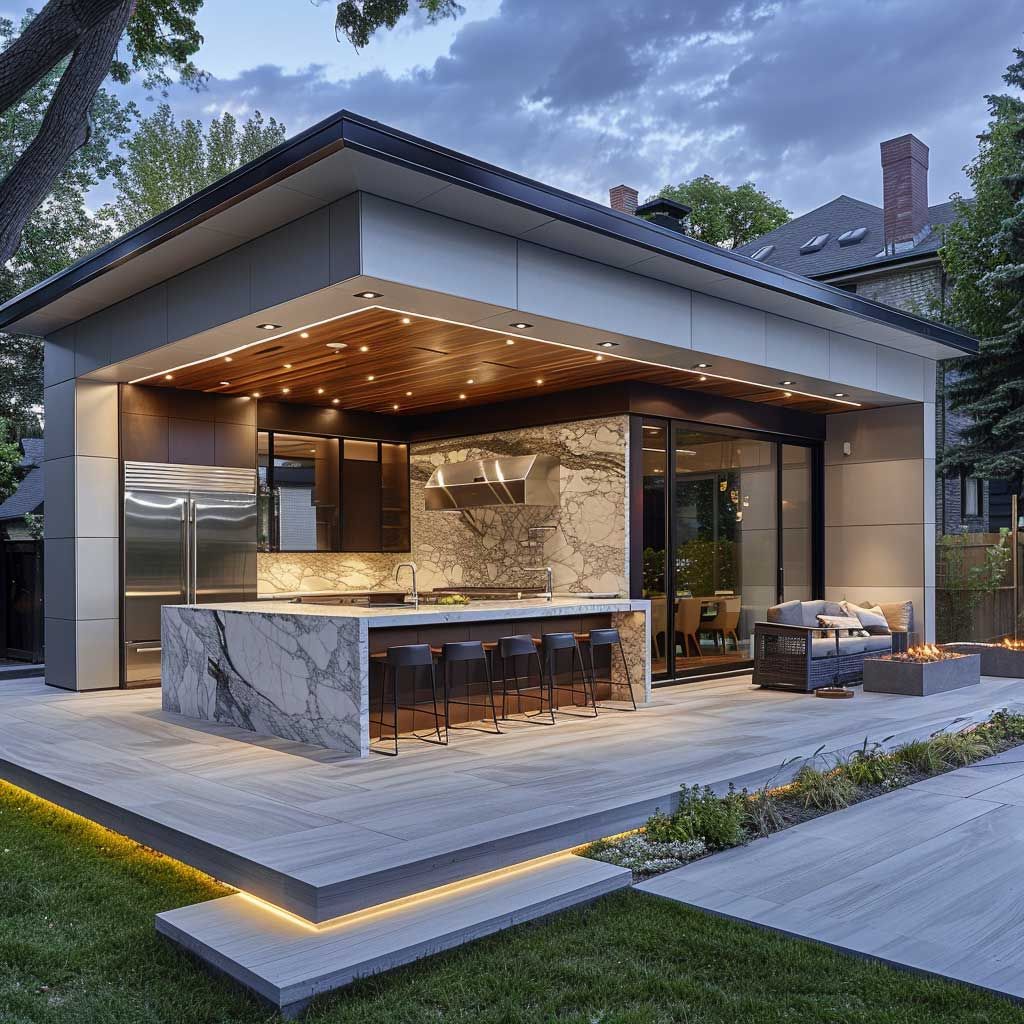
Strategic outdoor lighting transforms your kitchen into a usable space after dark.
Climate Control Elements
Seattle evenings can be cool even during summer. Adding comfort features extends your season:
- Overhead structures: Pergolas or covered roof sections provide rain protection and define the space
- Heating elements: Infrared heaters or fire features add warmth during cooler months
- Ceiling fans: Improve air circulation and help manage smoke from grills
Sustainable Design Considerations
At Angkorscape, we integrate sustainable design practices into every project. For outdoor kitchens, this means:
- Water management: Incorporating proper drainage and grading to handle runoff effectively
- Native plantings: Surrounding your kitchen area with climate-appropriate plants that require less water and maintenance
- Efficient irrigation: Smart systems that water plantings only when needed
- Permeable surfaces: Choosing paving materials that allow water infiltration where possible
These elements aren’t just environmentally responsible—they reduce long-term maintenance and help your outdoor space age gracefully. A well-planned landscape works with Seattle’s natural conditions rather than fighting against them.
Technology Integration
Modern outdoor kitchens can include smart features that enhance convenience:
- WiFi-enabled thermometers and temperature controls for precision cooking
- Weather-resistant speakers for entertainment
- Outdoor-rated outlets positioned strategically for appliances and devices
- Smart lighting controls accessible from your phone
Keep technology practical. Features should simplify your experience, not complicate it with systems that require constant troubleshooting.
Start with Professional Design
The biggest mistake we see homeowners make is jumping straight to construction without investing in proper planning. An outdoor kitchen is a significant investment—both financially and in terms of how you’ll use your outdoor space for years to come.
Working with a landscape design and build firm that handles both planning and construction keeps your project consistent from concept through completion. You’ll avoid miscommunications between designers and builders, and you’ll have confidence that what’s built matches what was designed.
The Angkorscape Approach
Every project at Angkorscape starts with a detailed design phase before any construction begins. We create custom 3D renderings that show exactly how your outdoor kitchen will look and function within your complete landscape design. This visualization helps you make informed decisions about layout, materials, and features while there’s still time to adjust plans.
Our design-build process means one team manages your project from start to finish. We understand Seattle’s climate, permitting requirements, and site conditions that impact outdoor kitchen success. Whether you’re in Redmond, Bellevue, Kirkland, or anywhere in Western Washington, we bring the same level of detailed planning to every project.
Questions to Ask During Consultation
When meeting with a landscape architect about your outdoor kitchen, come prepared with questions:
- How will the outdoor kitchen integrate with my existing landscape?
- What permits are required, and who handles that process?
- How do you address drainage and grading around outdoor cooking areas?
- What materials do you recommend for Seattle’s climate?
- Can I see examples of similar projects you’ve completed?
- How do you handle budget considerations during the design phase?
- What’s the timeline from design to completed construction?
These conversations help ensure you’re working with professionals who understand both design principles and practical construction realities.
Ready to Plan Your Outdoor Kitchen?
An outdoor kitchen represents a significant investment in your property and quality of life. Taking time upfront to plan thoughtfully—considering flow, functionality, and features that match your lifestyle—ensures you’ll love the space for decades.
At Angkorscape, we specialize in creating custom outdoor living spaces throughout Seattle and Western Washington. Our design-first approach means you’ll see your complete outdoor kitchen in detailed 3D renderings before construction begins. We handle everything from initial concepts through final installation, keeping your project on track with clear communication every step of the way.
Whether you’re envisioning a simple grilling station or a fully equipped outdoor culinary center, we’ll help you make informed decisions that balance aesthetics, functionality, and budget. Our team considers every detail—from appliance placement to lighting design to sustainable drainage solutions—so your outdoor kitchen performs beautifully long-term.
Let’s Design Your Dream Outdoor Kitchen
Ready to transform your backyard into an outdoor living space that you’ll use and love? Schedule a consultation with our team to discuss your project. We’ll review your property, answer your questions, and explain how our design-build process brings outdoor kitchen visions to life.