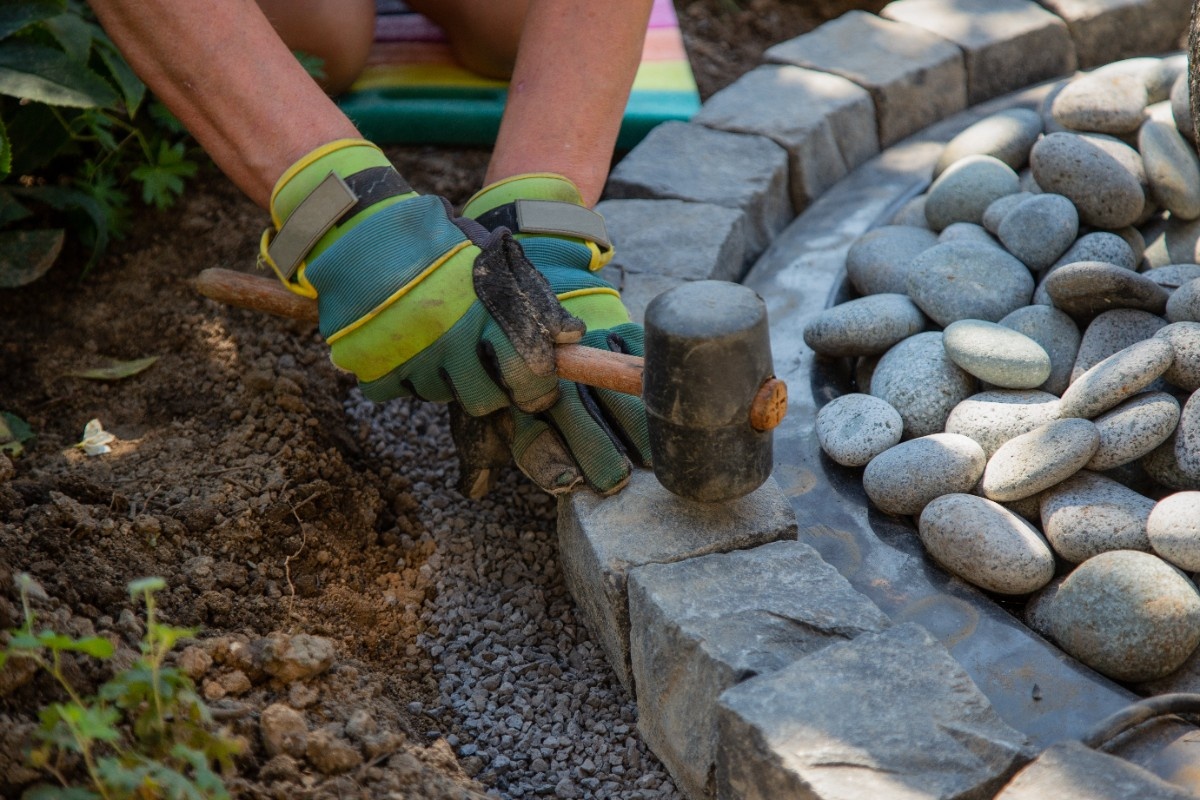
On a hillside lot above Lake Washington, a retaining wall is rarely just a wall. Here is what it takes to get the design, cost, and drainage right before you break ground.
August 2, 2026
•
12-minute read
Drive through Madison Park, Somerset, or the bluffs of Magnolia and you will notice something fast: almost nothing is flat. The same glacial activity that carved out Puget Sound left the entire region draped over ridges, kettles, and grades that rarely sit still on their own. A lot with a view is almost always a lot with a slope, and that slope is what a well-built retaining wall Seattle property owners rely on is there to tame.
That is why retaining walls show up as a line item on so many high-end projects here. They are not decoration. On a sloped parcel, a wall is what creates the level pad your home sits on, the terrace your pool deck needs, and the buffer that keeps a saturated hillside from pressing against your foundation every winter.
Ignore the grade and the consequences are not subtle:
This is also where retaining walls and broader hillside landscaping Seattle strategy meet. The wall is the structural spine. Everything else, the hardscaping services in Greater Seattle that follow, the plantings, the lighting, the usable outdoor rooms, hangs off that decision.
Not every grade change demands engineering. A gentle slope can sometimes be handled with planting and regrading. But once the numbers and the use case cross certain lines, a wall stops being optional.
You are likely looking at a true retaining wall when:
For premium properties, the answer is usually that the wall is both structural necessity and design feature at once. The engineering keeps the hillside where it belongs. The material and form decide whether the result looks like infrastructure or like it was always part of the architecture.

Strong retaining wall design in this region starts and ends with one factor that homeowners consistently underestimate: water. Our problem is not heat or seismic-only concerns. It is the long wet season, the better part of the year, working relentlessly behind the wall.
Drainage is the difference between a wall that lasts and one that fails. Proper retaining wall drainage means building a system the eye never sees:
Skip any of that and the wall becomes a dam. Saturated soil exerts pressure far beyond what an undrained wall is designed to resist, and in our climate that soil stays wet from October well into spring. Up in the foothills around Snoqualmie and North Bend, freeze-thaw cycles compound the saturation, prying apart anything built without that movement in mind.
Good design also respects the reason you are on a slope in the first place: the view. A wall should frame sightlines toward the water or the Cascades, not wall them off. The best ones absorb planting pockets, integrated lighting, and built-in seating so the structure reads as landscape rather than barrier.
Material is where engineering meets aesthetics. Each option carries a different look, cost, and structural ceiling:
Regionally iconic and unmistakably Pacific Northwest. Premium, characterful, and at home against evergreens and water views. Boulder walls suit informal, wooded lots beautifully.
Engineered, modular, and versatile. A strong performer for tiered systems across a wide range of wall heights.
Clean, architectural, and increasingly the signature of modern Seattle and Eastside homes.
A terraced retaining wall breaks a steep grade into stepped tiers, which eases soil pressure and creates plantable shelves on aggressive slopes.
Beyond material, the structural type matters. The common types of retaining walls each suit a different load and slope:
The right call depends on how much grade you are holding and how much load sits above it. That judgment is exactly what separates a specialist from a generalist.
On a serious property, a retaining wall Seattle homeowners commission is six-figure infrastructure, not a weekend line item. The honest answer on what it costs is that it depends, and an experienced contractor builds drainage and engineering into the bid from the start, not after the wall is in the ground.
What actually drives the budget on a high-investment build:
These are why ambitious walls climb well into six figures. A wall holding back a hillside below a multimillion-dollar view is infrastructure first and landscape second.
A retaining wall cost per square foot figure can be a useful starting point on a simple, low wall with easy access. But it breaks down the moment height, slope stability, or access enters the picture, which on most premium lots it does. Serious walls on graded view lots generally begin in the mid five figures and climb well into six, because the budget is driven by engineering, drainage, and material, not a tidy per-foot rate.

Here is the rule that catches people: in most jurisdictions across the three counties, a retaining wall over four feet, measured from the bottom of the footing to the top, requires a permit and engineered drawings.
That measurement detail matters more than it sounds. Because the four feet is counted from the bottom of the buried footing, a wall that stands only three feet above your yard can still cross the threshold once the foundation below grade is included. Plenty of homeowners assume they are under the line when they are not.
How that plays out depends on where you are. A retaining wall permit through the Seattle Department of Construction and Inspections follows different submittal steps than unincorporated King County, and Bellevue, Tacoma, and Everett each run their own process. Surcharges, like a slope above the wall or a driveway load behind it, can trigger a permit even below that four-foot line.
This is where a seasoned retaining wall Seattle specialist earns their keep, managing submittals across each jurisdiction instead of leaving the paperwork on your desk.
A contractor who treats permitting as their job, not your homework, is worth a great deal here. The good ones have working relationships with local engineers and know each jurisdiction's reviewers by name.
The gap between a hardscape specialist and a general landscaper who also pours walls is the widest in this entire trade, and on a serious property it is where the outcome is decided.
When you meet a retaining wall contractor Seattle homeowners should be listening for fluency, the sense that this person has solved your exact problem before. The right firm will talk about your site before they talk about price:
What tells you you are in the wrong hands is just as clear:
Local fluency is the whole job. A contractor who has spent years building against Puget Sound soil knows how this ground behaves when it is saturated, how it moves on a north-facing slope, and what each county will and will not approve. You can see how that experience shows up in a builder's completed hardscape projects before you ever sign anything.
A retaining wall Seattle homeowners invest in is two things at once: the infrastructure that keeps your hillside in place and the design element that defines how the whole landscape feels. Get the drainage, the design, and the permitting right and the wall quietly does its job for decades. Miss any one of the three and you are rebuilding sooner than you think.
That intersection of structural engineering and design craft is exactly where Angkorscape lives. We build walls across King, Pierce, and Snohomish Counties that are engineered for the way this region actually drains, constructed with proper compaction and reinforcement, and designed for the views people moved here for. If you are weighing a project and want a clear-eyed read on what your slope actually needs, reach out for a consultation and let's walk your site together.


It depends almost entirely on the site. A modest garden wall is one kind of project; a wall holding back a saturated slope below a view home is another. Premium builds with engineered drainage, natural stone, and difficult access run well into six figures, and even smaller engineered walls on a serious property represent a meaningful investment. The number follows the slope, not a price list.
Generally yes, once the wall passes four feet measured from the bottom of the footing to the top. Load sitting above or behind the wall, like a driveway or steeper grade, can trigger a permit and engineering even below that height. Requirements differ between Seattle, unincorporated King County, and individual cities, so the jurisdiction your property falls under sets the rules.
The best material is the one matched to your slope, load, and the look of your home. Basalt rockery and natural stone sit beautifully in the regional landscape, board-formed concrete suits modern architecture, and segmental block offers engineered versatility on tiered sites. On a premium property the choice is as much about how the wall reads against the house as how it performs.
Because our ground stays saturated for much of the year, and water is what brings walls down here. Trapped water behind a wall adds enormous weight and pressure the structure was never meant to carry, which is the leading cause of failure in this region. Engineered drainage is the quiet, invisible system that decides whether a wall lasts decades or starts leaning in a few winters.
A properly engineered and drained wall should last decades, and the best stone and concrete walls can stand far longer. Lifespan comes down to drainage, compaction, and build quality far more than material alone. Walls that fail early almost always fail for the same reason: water was never properly managed behind them.
On a high-end property it should be. The best walls carry integrated lighting, planting pockets, and built-in seating, and use materials that tie into the rest of the hardscape so the structure feels intentional. A retaining wall does not have to look like engineering, even when that is exactly what it is.
A terraced wall steps a slope into multiple tiers, while a single tall wall holds the entire grade at once. Terracing eases the pressure on each individual wall, opens up plantable shelves, and often reads better on a steep lot. It can also change how the project is permitted, since each tier may be evaluated on its own.
Look for a firm that asks about your site before quoting a price, works hand in hand with a structural engineer, and can show you comparable walls still standing years on. Local fluency with Puget Sound soil, slope behavior, and county code separates a wall that disappears into the landscape from one that becomes a problem. The right contractor treats permitting and engineering as their job, not your homework.
Serving Bellevue and the Eastside homeowners with custom outdoor living spaces. One process, one team, one result.
Contractors License : ANGKOI*750PA




.png)