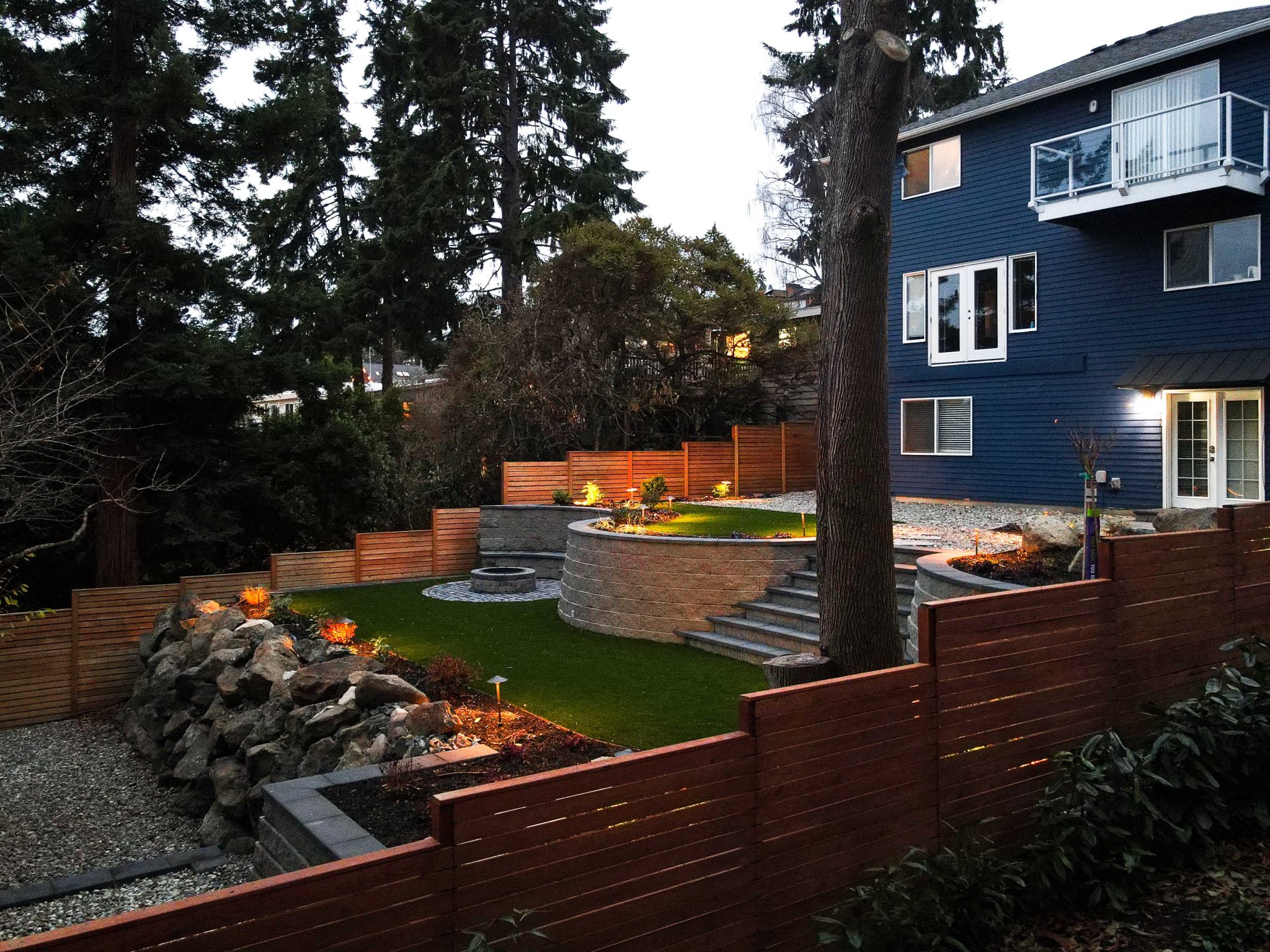
A backyard remodel in Greater Seattle is a serious design-build investment, not a weekend project. Find out exactly how the process unfolds and what your budget should realistically cover.
August 2, 2026
•
11-minute read
Before you look at a single design, the ground your home sits on has already started writing your budget. A backyard remodel in Greater Seattle is priced less by square footage and more by what the site demands, and the Puget Sound throws more at a yard than most regions do.
A few conditions show up on nearly every Eastside and South Sound project:
None of this is meant to scare you off. It explains why a quote-shopping mindset rarely serves a project of this scale. The number reflects the site, not just the space you are working with.
A full backyard remodel in Greater Seattle has more moving parts than most owners anticipate. Here is how a well-run design-build project sequences, why the order matters, and roughly how long each stage takes.
(The first step, usually wrapped up quickly.) It starts with a conversation, usually a call to understand scope and give you an honest range, followed by an on-site visit. Walking the actual yard is where budget, slope, access, and your priorities come together into something real. You leave this phase knowing whether your vision and your number live in the same neighborhood.
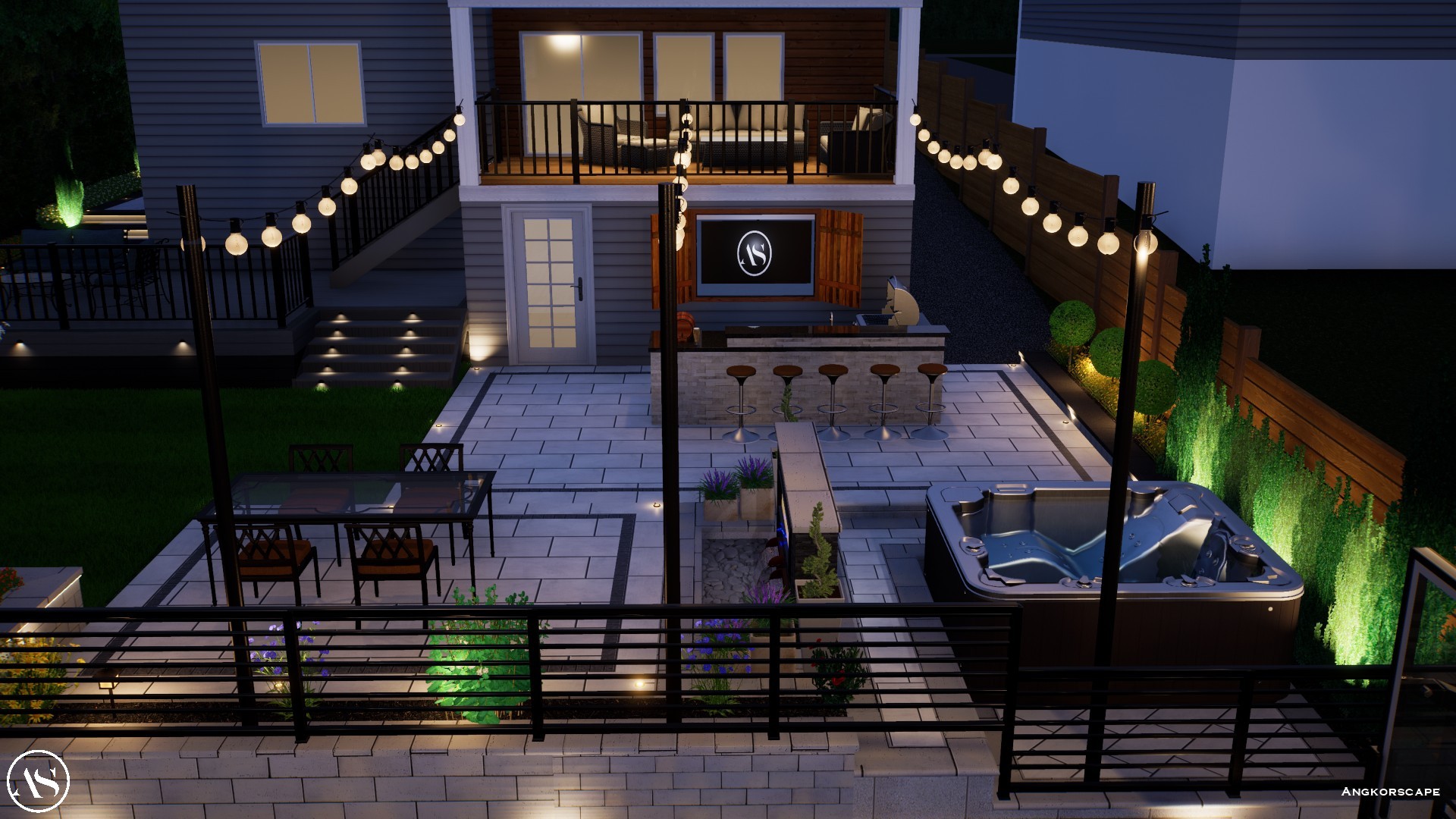
(The longest planning stage, paced by your revisions.) This is where the project takes shape. A full 3D model lets you see the outdoor living space before anything is built, paired with line-item pricing so every element is tied to a number you approved. Most projects move through two to three rounds of revision until the design and the budget agree. Nothing goes to construction until you sign off on exactly what gets built.
(Timelines vary by county and scope, often close to three months.) Depending on scope, your project may need structural engineering, county permits, and HOA approval. This is the phase owners underestimate most. A strong design-build team manages all of it in-house, so you are never chasing a document or wondering where an approval stands.
(The timeline here scales with scope.) With approvals in hand, construction runs on a defined schedule with one team and one point of contact. The best projects keep you informed at every stage rather than leaving you guessing, and they finish with a walkthrough that confirms the built space matches the design you approved.
This is the question everyone wants answered first, so here it is plainly. A full backyard transformation Seattle is a premium investment. Most build-phase projects fall between $75,000 and $500,000, with the average landing around $150,000. Where a given project sits depends almost entirely on scope, with outdoor kitchens, covered patios, a pool or jacuzzi, and significant hardscape carrying it toward the upper end.
Before any of that, the design itself is a defined step. A conceptual design phase typically starts around $2,500 and produces a 3D walkthrough, screenshots, and an initial estimate, so you see the space and a real number before committing to a full build.
When owners ask "how much does a backyard remodel cost?", the honest answer is that it depends on how far the scope reaches:
What is the difference between a backyard remodel and a backyard renovation? A renovation refreshes what already exists. A remodel rethinks the entire space, changing how the yard is laid out and how it functions. That is why a true backyard renovation in Seattle runs well beyond a surface-level update, and why backyard remodel cost and a simple refresh belong in different conversations.

Two yards of identical size can land thousands of dollars apart. The difference is rarely the patio itself. It is everything underneath and around it.
After enough projects across King, Pierce, and Snohomish County, clear patterns emerge in how owners want to live outside. These are not packages to pick from, just directions homeowners lean toward once they see what their site supports. Use them as starting points for your own backyard makeover.
A deck or porch addition often stitches these together, pushing the home's footprint into the yard instead of leaving the two separate.

When is the best time to start a backyard remodel Seattle? Earlier than most people think. The smartest move many owners make is using the wet months for design and permitting, so construction lands in the dry stretch from late spring through early fall.
A realistic rhythm looks like this:
Permitting is the variable that stretches timelines most, and each county adds its own pace. Starting a design conversation in January for a summer-finished yard is far more realistic than calling in May and hoping to host by July.
A backyard remodel in Seattle rewards owners who plan deliberately. The cost reflects the site, the timeline reflects the seasons and the permitting, and the result reflects how clearly the work was scoped before anyone broke ground. Going in with realistic expectations on all three is what separates a project that exceeds expectations from one that disappoints.
That is the part Angkorscape takes seriously. As a design-build team working across King, Pierce, and Snohomish County, we price every project to the real number from the first conversation, so the figure you approve is the figure that drives the build. If you are weighing a project and want an honest range before committing to anything, start with a consultation and we will walk you through what your specific yard actually requires.


It varies with scope, but plan for several months rather than several weeks. Design and revisions take a few weeks, permitting in our region commonly runs close to three months, and construction follows from there. A summer-finished yard usually means a conversation that started the previous fall or winter.
It can, which is exactly why the design and permitting phases are scheduled through the wet months. By sequencing the paperwork for fall and winter, construction lands in the drier spring-to-fall window when crews can build efficiently and the ground cooperates.
There is no hard floor, but the design-build process, with its site visit, full 3D design, permitting, and phased construction, is built for projects of real scope. Smaller refreshes are better served by simpler landscaping work. A full remodel makes sense when you are reimagining the entire space.
Come in with a range rather than a fixed figure, and be honest about it. A good design-build team designs to your budget from day one, so the plan reflects what can actually be built, not an aspirational version that gets cut later. Knowing your ceiling early protects the whole process.
Often, yes, depending on scope. Structural elements, certain drainage work, and features like covers or outdoor kitchens can all trigger permits and engineering. Each county runs its own review process, and a design-build team should manage that coordination for you rather than leaving it on your plate.
A refresh updates what is already there: new plants, fresh mulch, a repaired patio. A backyard transformation rethinks the entire space, often involving structural builds, grading, drainage, and hardscape that change how the yard functions and feels. The investment and the result are on different scales.
In the Puget Sound, yes. Proper water management is one of the least visible and most important parts of any serious build here. Engineered drainage and correct base preparation are what keep a yard performing through the wet season, and cutting them to save money tends to cost far more later.
Premium design-build projects are typically milestone based, tied to clear stages of progress rather than a single lump sum. The specifics are set out before construction begins, so you always know what is due and when as the work moves forward.

Serving Greater Seattle homeowners with custom outdoor living spaces. One process, one team, one result.
Contractors License : ANGKOI*750PA




.png)