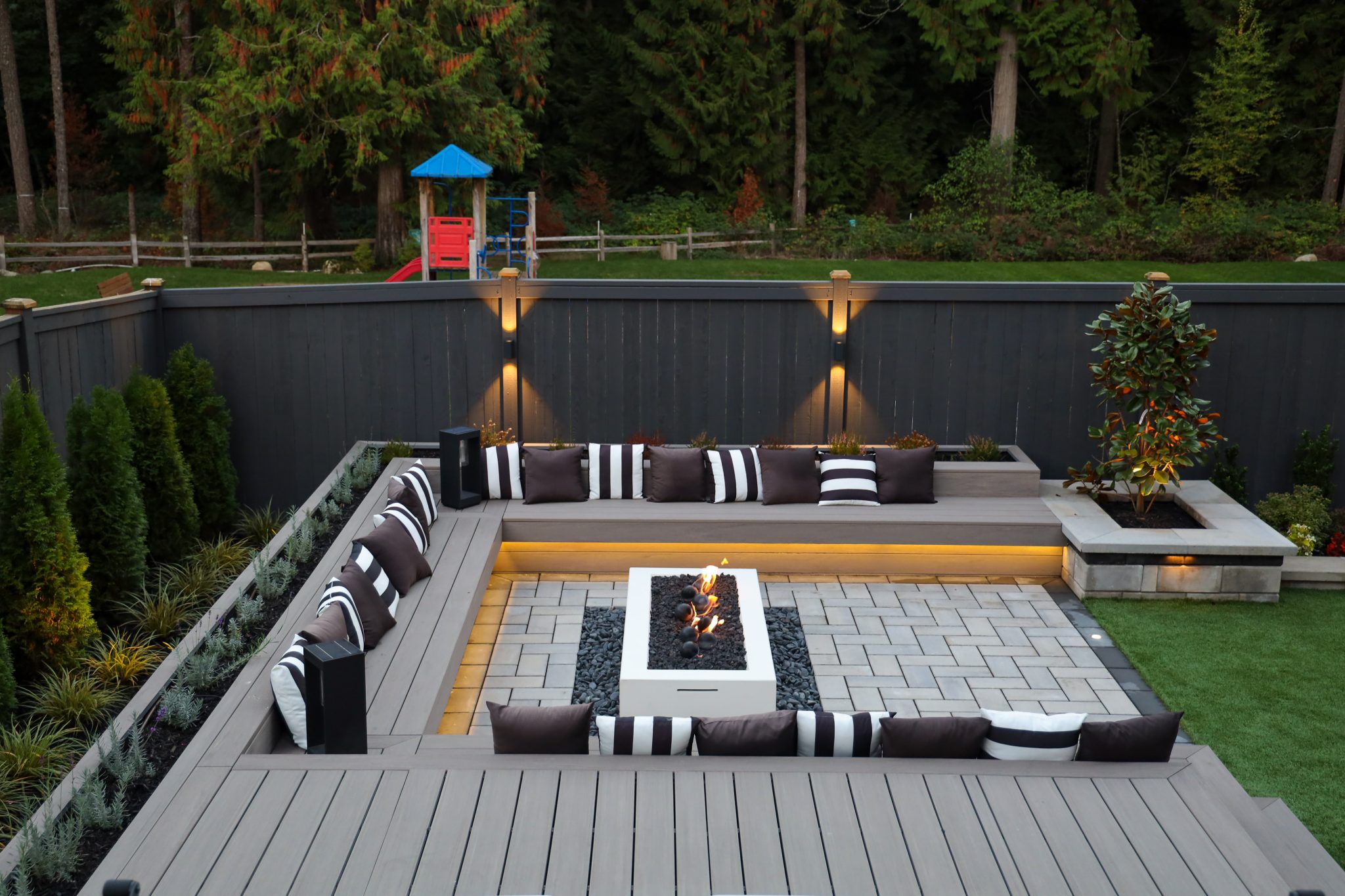
Rain shapes everything an outdoor space has to survive here. This guide covers the materials, design, and installation realities behind a paver patio Seattle homeowners can rely on.
July 27, 2026
•
10-minute read
Material is where the most expensive mistakes get made, usually before a single shovel hits the ground. The best pavers for Seattle climate are dense and low-absorption, because a porous unit that stays saturated through our wet season can crack if that trapped water freezes and expands during a cold snap.
Here's how the main options actually behave in our corner of the Northwest:
This is also where the concrete vs paver patio question really gets settled. A poured slab is cheaper on day one, but our saturated ground and seasonal freeze-thaw movement tend to crack and shift it within a few winters. Pavers flex with that movement instead of fighting it, and a single unit can be lifted and reset rather than patched with a visible scar. On a property where the hardscape is meant to read as an extension of the home rather than a utility surface, that difference in how the two age is the whole argument.
When we specify the best pavers for PNW climate on a high-end project, absorption rating and surface traction carry as much weight as the look. A gorgeous paver that turns into an ice rink every December is a failure no matter how it photographs. Color stability matters too, since cheaper units fade unevenly under our flat gray light and constant moisture, leaving a patio looking tired years before it should.
Skip anything porous or soft enough to hold moisture, because in our shade and damp it will grow moss and turn slick within a season or two. Tumbled stone with a rough, water-trapping surface and budget concrete units with high absorption are the usual offenders.
In a yard that sees real rain nine months a year, the wrong choice becomes a slip hazard and a standing maintenance chore. The same goes for anything with a sealed, glossy finish that sheds traction the moment it gets wet, which on a sloped approach or near a water feature is a genuine safety problem rather than a cosmetic one.

Strong patio design Seattle properties actually live on starts with how the space connects to the house, the grade, and the view. On the larger projects we handle across the Eastside and the Sound's shoreline neighborhoods, a patio is never a slab dropped in the yard. It is one piece of a larger outdoor composition that includes walls, plantings, and the way water leaves the site.
The factors that carry the most weight here:
For backyard patio ideas Seattle estates tend to favor, the move is layered zones rather than a single open expanse: a dining terrace, a fire feature for the long shoulder seasons, and a covered section that stays usable through the wet months. In this market a covered element isn't a luxury add-on. It is what makes the whole space earn its keep from October through June.
Orientation deserves more thought than it usually gets, too. A west-facing terrace catches our long summer evenings beautifully but bakes with no shade plan, while a north-facing space needs hardscape and planting choices that won't sulk in near-permanent shade. Getting that read right at the design stage is what separates a patio people actually use from one that looks good in photos and sits empty most of the year.
This is where most patios quietly fail, long before anyone notices. A flawless paver laid over a lazy base will still settle, and no amount of surface beauty saves a Seattle paver patio once the rains return. Understanding the real sequence helps you judge whether a contractor is building for the long haul or racing to the finish.
A proper installation moves through these stages:
The base is the entire ballgame in the Puget Sound. In our soil, where winter saturation and the occasional hard freeze work against any shortcut, that crushed-rock foundation is what stands between a patio that stays dead level and one that turns into a slow-motion wave. Skilled crews also build in subtle slope, often around a quarter inch per foot, so water sheets off toward a planned outlet instead of pooling against the house or freezing in low spots.
The stakes sit underground, which is exactly why this isn't a weekend project here. Reading grade across a sloped lot, engineering drainage that actually moves water off the property, and compacting a base that won't betray you in February all take equipment and judgment that come from doing it through many wet seasons.
A premium patio is hardscape infrastructure, and the cost of getting the buried work wrong dwarfs whatever a DIY attempt seems to save. Tearing out and rebuilding a settled patio almost always costs more than building it correctly the first time, before a single paver was ever set.

Let's talk numbers without the hand-waving. The paver patio cost installed swings widely with material, site difficulty, and how ambitious the design gets. The patio installation cost on a compact, flat, single-material project lives in a different universe from a multi-zone terrace stepping down a sloped Mercer Island lot toward the water.
Rough guidance for the Greater Seattle market:
For perspective, the larger estate projects we've delivered across King, Pierce, and Snohomish County have run well into six figures, with some fully integrated outdoor builds approaching $300,000. At that tier you aren't buying a patio. You are commissioning an engineered outdoor environment meant to outlast the mortgage.
For a broader view of how paver cost fits into full landscape design-build project budgets, our landscaping cost guide for Greater Seattle covers the full project tier breakdown.
It's worth noting where the money actually goes on a paver patio Seattle project, because the visible pavers are rarely the largest line item. On a complex site, excavation, base, drainage, and structural work below the surface often outweigh the cost of the material you see, which is precisely why the cheapest bid usually signals corners cut underground.
A paver patio is one of the surest ways to add genuinely usable space and lasting value to a home in this region, but only when material, design, and installation are all matched to the way our climate actually behaves. The owners who get it right treat the patio as infrastructure first and a beautiful surface second, because here those two things were never separate to begin with.
That blend of buried engineering and design ambition is the exact work Angkorscape was built to do. If a serious outdoor project has been taking shape in your head for a property anywhere across King, Pierce, or Snohomish County, the most useful next step is a conversation that tests those ideas against what your site, soil, and budget can really carry. Get in touch when you want to see what's genuinely possible on your land.

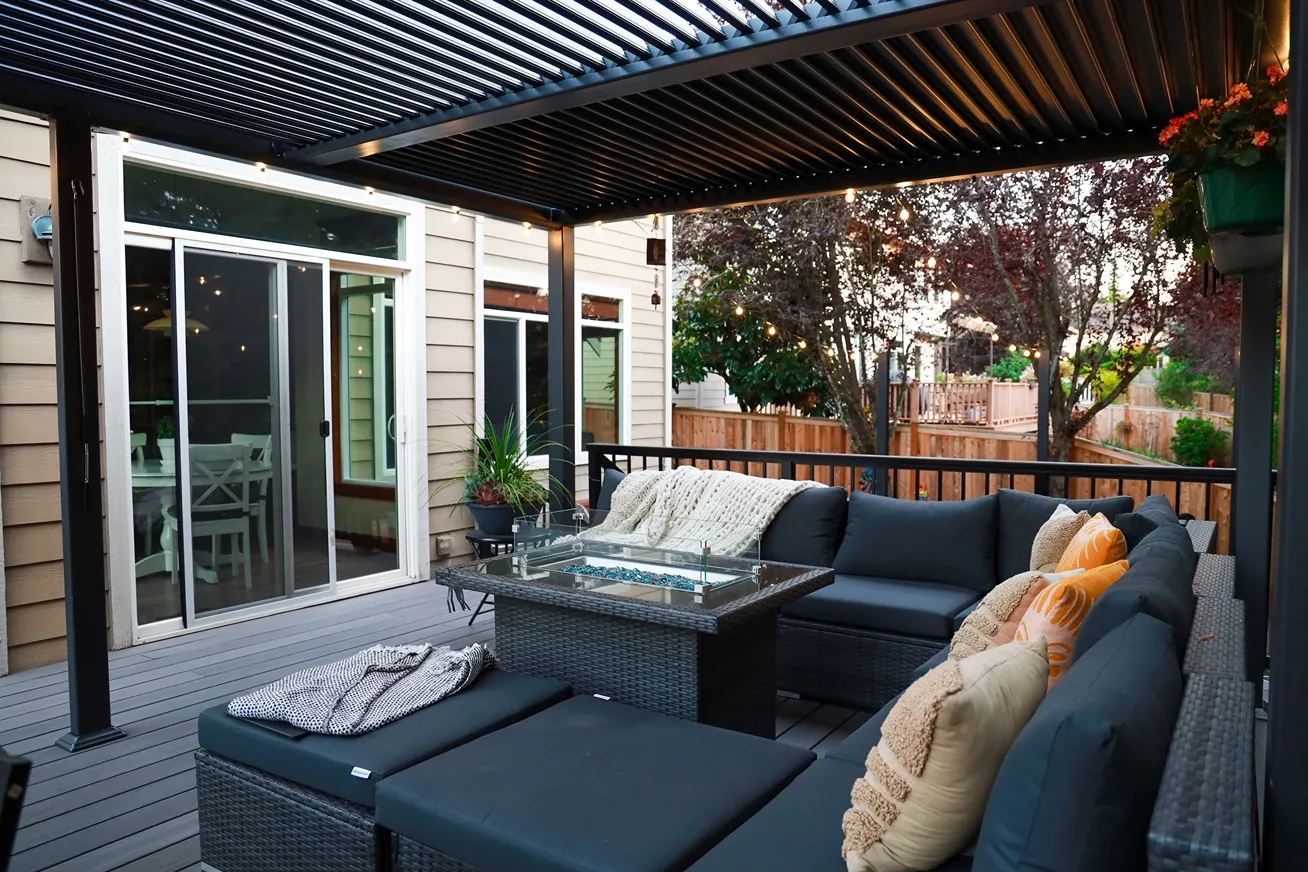

Built on a correct base, a quality paver patio here can last 25 to 40 years. Longevity depends far more on base depth and drainage than on the paver itself, which is why the crew underground matters more than the brand on top.
Pavers generally win in our climate. They flex with the ground movement our wet-then-frozen soil creates, drain better, and let you repair a single unit, while a poured slab tends to crack and stain over time in constant moisture.
Dense, low-absorption materials like porcelain and tight-grained natural stone perform best where shade and damp linger. Steer clear of porous, rough-surfaced pavers that hold water and grow moss, since those turn slick and high-maintenance fast.
A ground-level, uncovered patio often doesn't need a building permit, but Seattle treats anything raised more than 18 inches above grade as a structure, which changes things. Add a roof, run lighting circuits, or exceed your lot's hard-surface limit and review gets triggered. Permeable pavers may still count toward hard-surface thresholds depending on the jurisdiction, so don't assume they're exempt.
Premium installations generally run $45 to $90 and up per square foot, and large integrated projects with walls, drainage, and features reach well into six figures. Site complexity is usually the single biggest variable in the final number.
Late spring through early fall gives the most dependable dry window for excavation and base work. Experienced crews can still build in the shoulder seasons by managing the site carefully around the weather, so booking ahead off-season is often smart.
Sinking almost always traces back to a thin base or poor drainage rather than the pavers themselves. A deep, properly compacted base, accurate grading, and solid edge restraint are what hold a patio level through years of Puget Sound winters.

Serving Bellevue and the Eastside homeowners with custom outdoor living spaces. One process, one team, one result.
Contractors License : ANGKOI*750PA




.png)