The best patio materials for Seattle's weather are not always the ones that look best in photos, and here is why.
August 2, 2026
•
10-minute read
Not every patio material that looks stunning in a magazine will actually hold up in a Seattle backyard. Our constant rain, freeze-thaw cycles, and damp shade create a real performance test, and plenty of materials eventually fail it. At Angkorscape, we see this play out on real properties across Greater Seattle. This guide ranks the best patio materials for Seattle's weather based on how they actually perform here, not how they photograph in a drier climate.
The best patio materials for Seattle's weather share a few traits: low porosity, strong traction when wet, and resistance to freeze-thaw cracking. Porcelain pavers, quality natural stone, and concrete pavers all perform reasonably well when installed correctly.
Moss and algae growth is a real concern in our wet climate, especially in shaded areas that never fully dry out. Materials that resist moisture and tolerate freeze-thaw cycles hold their look and structure far longer than materials chosen for looks alone. Quality installation, including proper drainage beneath the surface, matters just as much as the material itself.
Shock absorption also plays a bigger role here than most homeowners expect. A patio material that stays slightly flexible tends to handle the repeated expansion and contraction of freeze-thaw cycles better than a rigid one, which is part of why jointed materials like pavers generally outperform a single solid slab over time. Sunlight exposure matters too, since a fully shaded patio area will hold moisture and grow moss far more aggressively than a spot that gets a few hours of direct sun.
Porcelain pavers generally outperform natural stone in our climate, mainly because they are virtually non-porous. Natural stone can still work beautifully, but it asks more of you in maintenance.
Slip-resistant outdoor porcelain pavers are manufactured with a textured finish specifically for traction in wet weather, which matters on a rainy Seattle patio used year-round. They resist staining, do not absorb water the way stone does, and hold up well through repeated freeze-thaw cycles.
Natural stone patios blend beautifully with Pacific Northwest landscapes, and options like basalt and slate provide excellent traction in heavy rain. Dark stone and limestone, however, can require more frequent sealing in wet environments to prevent staining and moss buildup.
💡 Pro Tip: If you love the look of natural stone, ask specifically about basalt or slate rather than travertine, since travertine's higher porosity makes it one of the more moss-prone options in a rainy climate.
For homeowners comparing the best patio materials for rainy Seattle conditions specifically, the deciding factor usually comes down to how much sealing and cleaning you are willing to commit to over the years. Porcelain asks almost nothing of you after installation. Natural stone rewards regular care with a beautiful, timeless look, but it does ask for that care.
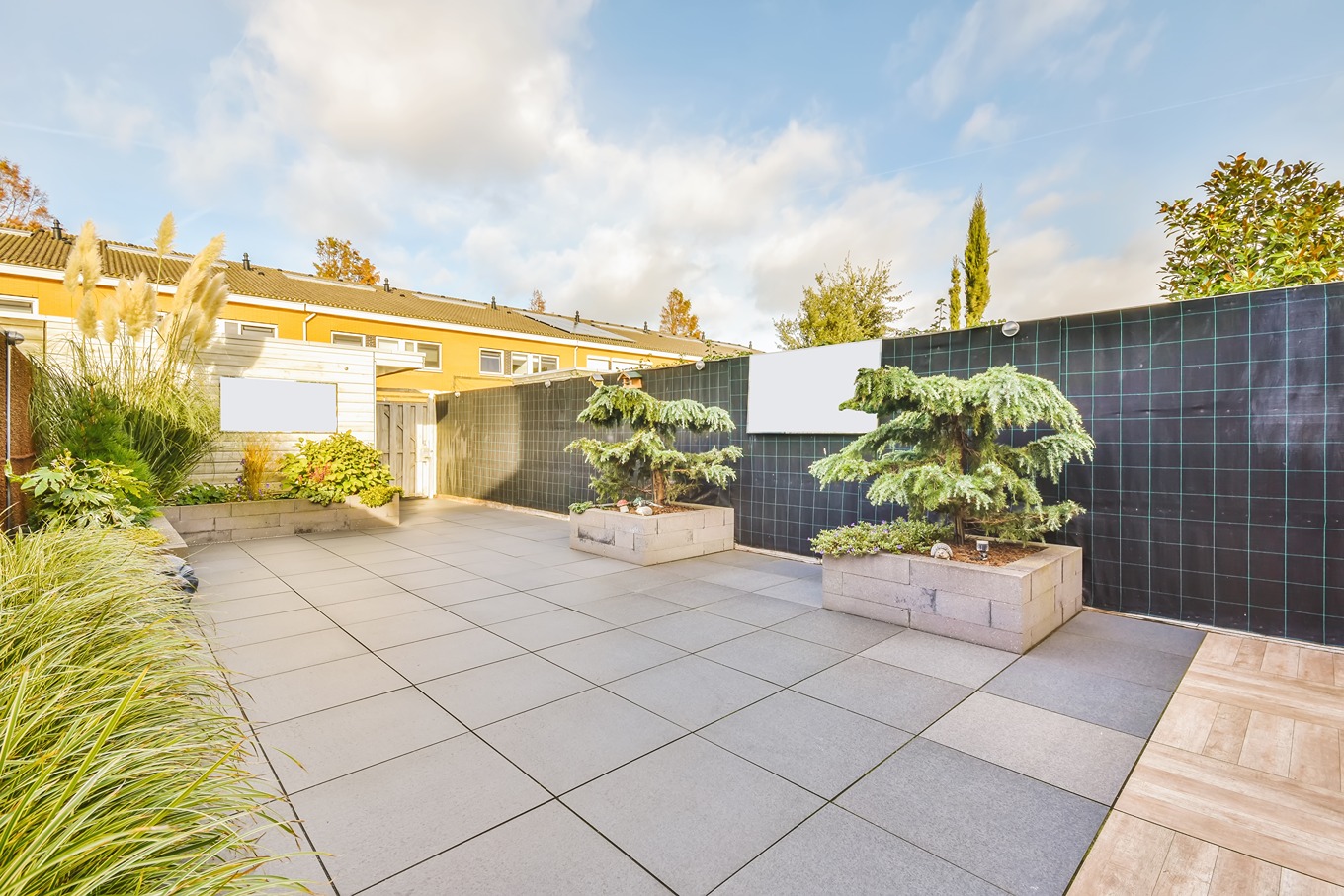
Concrete pavers generally outperform poured concrete slabs in Seattle's climate. Concrete pavers resist cracking better than large concrete slabs because their smaller, jointed design flexes slightly with ground movement instead of fracturing.
Poured concrete is one of the most common patio mistakes in this region. Without proper base preparation, it can crack within just a few years as our clay-heavy soil expands and contracts through repeated freeze-thaw cycles. A compacted gravel base of at least 4 to 6 inches, and often deeper in our clay-heavy soils, is essential for any patio material here, but it matters most for poured concrete.
Permeable pavers allow rainwater to pass directly through the surface rather than pooling on top, which is a real advantage during our wetter months. Costs vary by project scope and site conditions, so treat these figures as a general starting point rather than a quote.
Efflorescence, a chalky white residue that can appear on concrete surfaces in wet climates, is another consideration worth asking your contractor about. It is generally cosmetic rather than structural, but it can affect the finished look of concrete pavers over time, particularly on darker colors. A quality sealant applied during installation helps reduce how quickly this shows up.
.jpg)
Decomposed granite patio drainage is the main weakness with this material in our climate. It looks natural and costs less upfront, but it tends to become muddy and shift out of place during our long rainy season.
Decomposed granite patio drainage problems show up most in areas without proper edging or a compacted base, where the material migrates and creates low spots that hold water. Moss also tends to establish quickly in decomposed granite that stays damp for extended periods, since the loose surface holds moisture longer than a sealed hardscape material.
That said, decomposed granite still has a place in a Seattle backyard, just not usually as the primary patio surface. It can work well for a garden path or a transitional area between planting beds, where its natural look and lower cost matter more than year-round durability under foot traffic.
Solving decomposed granite patio drainage issues generally means better edging, a compacted base, and keeping it out of the lowest points in your yard.
Picking the right material does not need to be complicated. Walk through this sequence before committing to anything.
You can browse completed patio projects to see how different materials hold up on real Seattle properties over time.
💡 Pro Tip: Before choosing a patio material based on price alone, ask how it performs in shaded, damp conditions specifically, since that is where most patio materials in Seattle actually fail.
For a raised patio or deck edge, material choice matters just as much for railings as it does for the surface below. So what holds up best? The best railing materials for outdoor patios in rainy climates resist rust, rot, and moisture damage without constant upkeep.
Aluminum and composite railing systems tend to perform well here, since they will not rust like untreated steel or rot like standard wood over repeated wet seasons. Cedar can also hold up reasonably well thanks to its natural resistance to moisture and insects, though it still benefits from periodic sealing to last through repeated wet seasons.
Whatever material you choose, look for finishes rated specifically for damp, coastal, or Pacific Northwest conditions, since a coating rated for a dry climate will not last nearly as long here.
Composite decking resists moisture and requires low maintenance, which makes it a natural pairing with a composite or aluminum railing system. Matching the railing material to the deck or patio surface below keeps the whole structure aging at the same rate, rather than replacing one component years before the other.
A few warning signs suggest a patio material is struggling to keep up with our weather:
If any of these sound familiar, schedule a consultation and we can walk through whether a repair or a full material swap makes more sense.
A little seasonal care goes a long way in our climate, regardless of which material you choose. Even the best patio materials for Seattle's weather still benefit from a bit of upkeep:
The right patio material for your Seattle backyard depends on your budget, your maintenance tolerance, and how your site actually drains. Our hardscaping services are built around matching material choice to real site conditions, not just aesthetics.
If you are weighing whether your project needs a landscape architect or a contractor to make those material decisions, our landscape architect vs contractor guide walks through exactly that.
Before you fall in love with a material because of a photo, understand how it performs after several Pacific Northwest winters. A full backyard remodel built around the right material from the start saves you from an expensive replacement a few years down the road.
Choosing the best patio materials for Seattle's weather comes down to porosity, traction, and how well a material handles freeze-thaw cycles and constant moisture. Porcelain pavers and quality natural stone consistently perform best, while decomposed granite and unreinforced poured concrete tend to struggle here. Getting the base preparation and drainage right matters just as much as the material, which is why we walk every client through our design and build process before any material gets chosen. If you want help picking the right material for your site, reach out to Angkorscape and we will walk your yard with you.

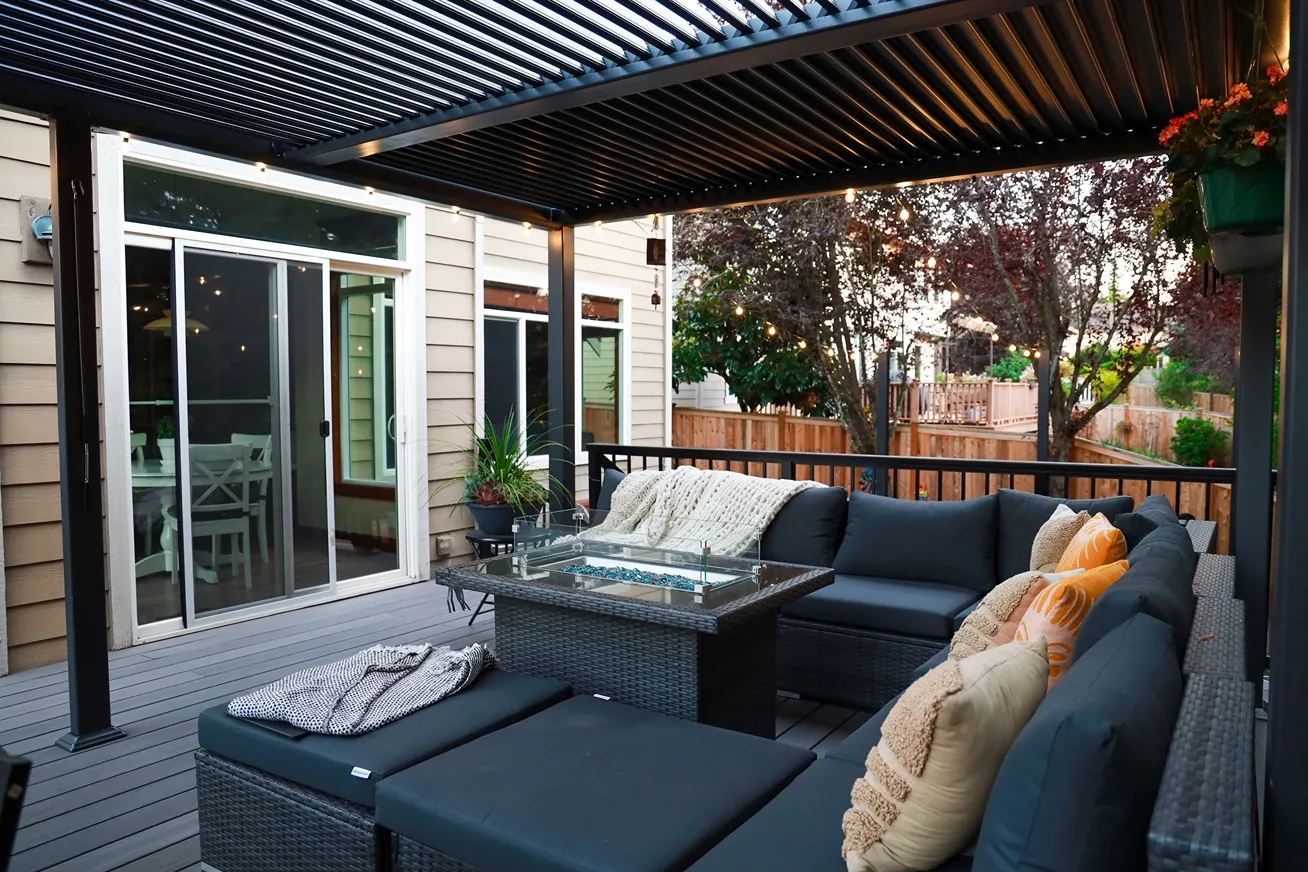

Porcelain pavers and quality natural stone like basalt generally perform best, since they resist moisture and hold traction when wet. Both require less ongoing maintenance than more porous options.
Yes, slip-resistant outdoor porcelain pavers use a textured finish specifically designed to improve traction on a wet surface. This matters most on stairs, sloped patios, and areas near pools or water features.
The loose surface holds moisture and can shift without proper edging and a compacted base. It also tends to grow moss faster than sealed hardscape options.
Concrete pavers generally hold up better than poured concrete slabs, since the jointed design flexes with ground movement instead of cracking. Poured concrete can still work with proper base preparation and reinforcement.
Aluminum and composite railing systems tend to outperform untreated wood and steel in constant moisture, since they resist rust and rot. A finish rated for damp or coastal conditions extends the life of any railing material further.

Serving Bellevue and the Eastside homeowners with custom outdoor living spaces. One process, one team, one result.
Contractors License : ANGKOI*750PA





.png)

