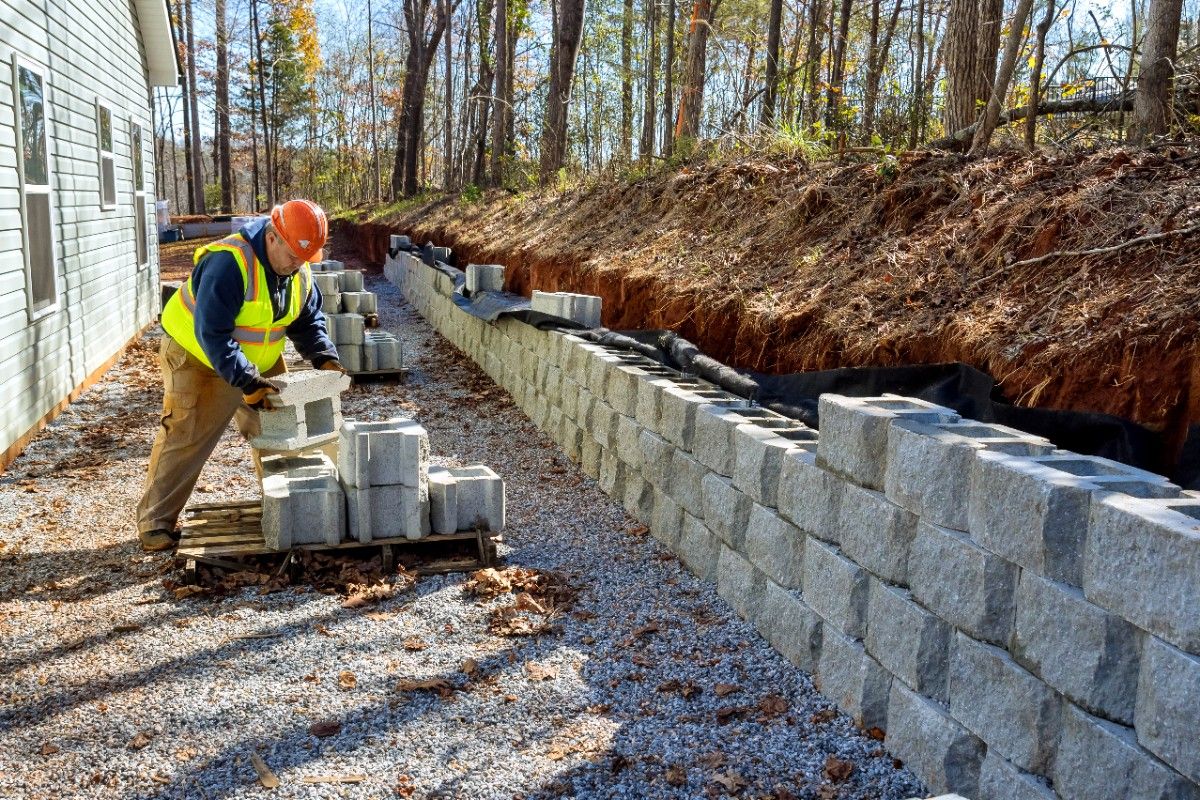
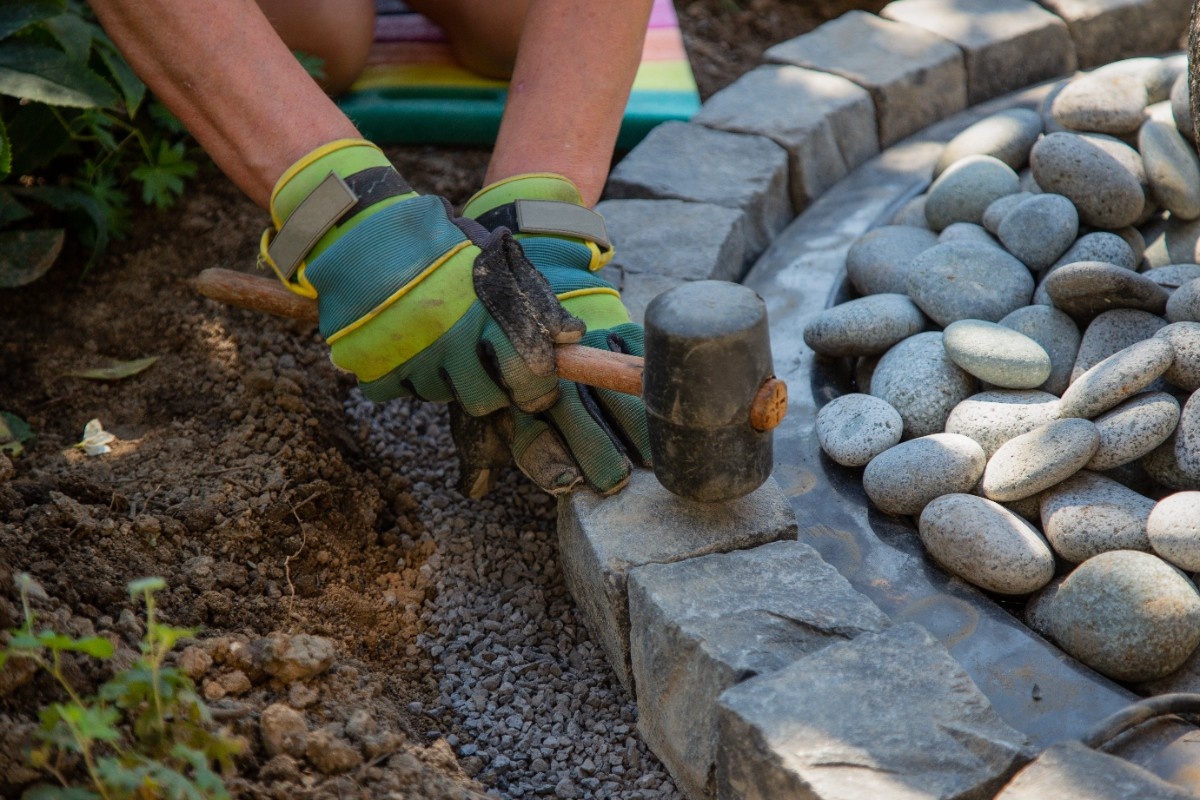
Effective sloped-yard landscaping in Redmond starts with understanding your grade, managing water runoff, and choosing between retaining walls and terracing based on what your specific lot actually needs.
October 15, 2026
•
9-minute read
Redmond's residential terrain creates grade challenges that flat suburban neighborhoods never face. Education Hill, Redmond Ridge, Trilogy, and the neighborhoods along the Sammamish River valley edge sit on varied elevations where backyards can drop several feet from the house to the property line.
Many of these lots were graded minimally during original construction. Previous owners may have left the slope untouched or added temporary fixes like railroad ties or cinder blocks that have since failed.
The short answer: work with the grade instead of against it. That means stabilizing the slope, controlling where water goes, and planting for root depth. The rest of this guide covers each piece in detail, but the principle stays the same: a sloped backyard is not a problem. It is an opportunity to create different levels, add visual depth, and build outdoor space that a flat lot simply cannot offer.
On the hillside lots we design in Redmond, the grade itself becomes the asset once drainage, structure, and planting are handled correctly from the start.
The most effective way to stabilize a steep slope is a combination of structural elements and deep-rooted planting. Retaining walls stabilize steep slopes effectively by holding soil in place and redirecting lateral pressure. But walls alone are not enough. Plant roots stabilize hillsides and prevent erosion over time, so a layered approach works best.
Smart plant selection prioritizes deep-rooted and drought-tolerant species. Place drought-tolerant plants at the top of slopes where moisture drains away fastest. Creeping groundcovers like creeping juniper and creeping phlox effectively cover bare soil on moderate slopes. Mix trees, shrubs, and perennials for a layered hillside garden that holds ground at every level.
Native plants require less maintenance and support local wildlife while providing root systems adapted to Redmond's soil and climate conditions.
💡 Pro Tip: Avoid leaving any bare soil on newly planted slopes. Mulching reduces surface erosion and cushions raindrop impact until root systems take hold. Even a temporary layer of straw or wood chip mulch makes a significant difference during the first winter.
Both hold back soil, but they suit different lots. Here is how they compare for Redmond properties.
On a tight Redmond lot where the grade drops sharply near the house or driveway, a single retaining wall creates the most usable flat area in the least horizontal distance. This is common on Education Hill where setbacks are narrow and homeowners need every square foot of level ground.
Terraced backyard landscaping ideas work best on wider lots with a more gradual slope. Each tier becomes its own zone: a patio on the first level, a fire pit area on the second, a garden bed or play space on the third. Terraced lots across the Eastside gain room that never existed before, and the stepped look blends naturally into Redmond's rolling terrain.
Pathways and stone steps connect different levels and encourage movement through the yard. Landscape features should generally run across the slope to reduce runoff, so terracing naturally aligns with proper drainage management.
Yard grading for drainage is the process of reshaping the surface of your lot so water flows where you want it instead of pooling where it causes damage. Getting this right before any walls, patios, or planting go in is essential.
Redmond gets steady rain through the wet season, concentrated from roughly October through March. On a sloped yard, that water gains speed as it moves downhill. Without proper grading, it concentrates at the lowest point of your property, saturates the soil behind retaining walls, and creates drainage issues that undermine everything built above.
Grading and drainage are especially critical on Redmond lots because many neighborhoods sit on clay-heavy soil that drains slowly. Without proper grading, water backs up behind walls and eventually pushes them forward.
This is the single most common failure point in hillside projects. A wall that looks perfect can fail within a few years if the drainage behind it was skipped or done wrong.
Water saturates the soil behind the wall. That saturated soil becomes heavier and exerts more lateral pressure than the wall was designed to handle. Over time, the wall leans, cracks, or collapses entirely.
Strategic drainage management diverts water safely around slopes. Every retaining wall our team builds includes engineered drainage behind the wall as a non-negotiable element, not an add-on. Our hardscaping specialists handle engineering, permits, and construction under one roof.
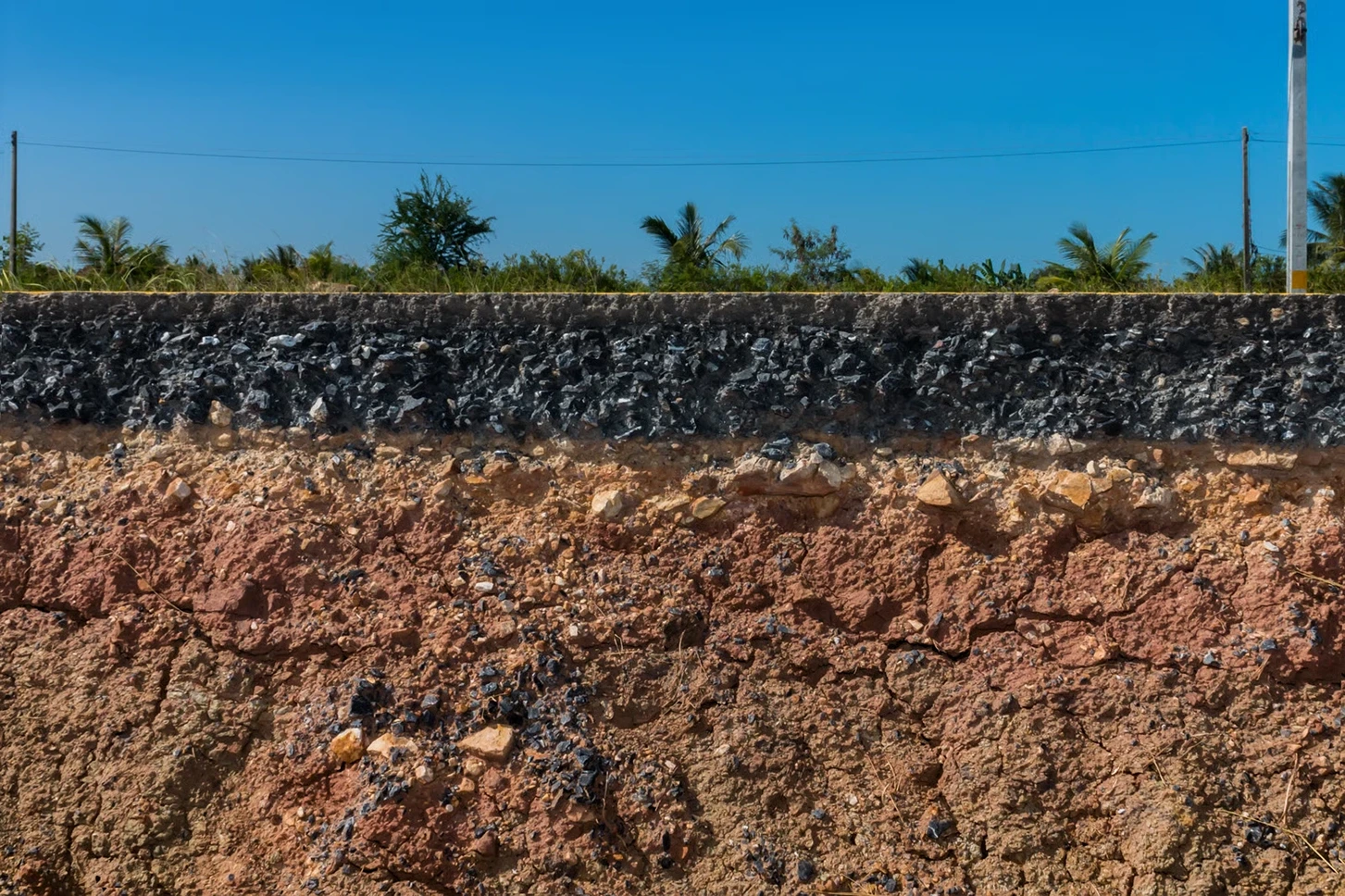
Choosing the right plants for a sloped yard means prioritizing root depth, erosion control, and low maintenance over pure aesthetics. Here are the categories that perform best on Redmond hillsides.
On a terraced hillside, trees anchor the top tier and shelter the levels below. On Redmond slopes, native conifers like Western red cedar and Douglas fir anchor the upper grade while providing shade, wind protection, and foliage interest through every season.
Preserving existing trees and shrubs on your slope provides valuable erosion protection. Always assess what is already growing before removing anything. Previous owners may have planted species that are now doing critical stabilization work.
💡 Pro Tip: Place drought-tolerant plants at the top of your slope and moisture-loving species near the bottom. Water naturally migrates downhill, so matching plant needs to natural moisture zones reduces irrigation requirements and keeps everything healthier with less effort.
Even well-intentioned sloped yard landscaping projects go wrong when these mistakes happen.
If your property sits in one of these areas, hillside landscaping is likely in your future.
Older homes on Education Hill frequently sit on lots with significant grade changes from front to back. Many original landscapes are aging, and retaining walls from the 1980s and 1990s are reaching the end of their useful life.
Newer developments on Redmond Ridge were built on terrain with natural elevation changes. While initial grading was done during construction, many homeowners discover that their back yard still has unusable slope that could become a terraced patio, garden, or fire pit area.
Properties along the valley edge face unique drainage challenges where water runoff from higher elevations moves through residential lots. Yard grading for drainage is especially important here to protect foundations, fences, and lower yard areas from water accumulation.
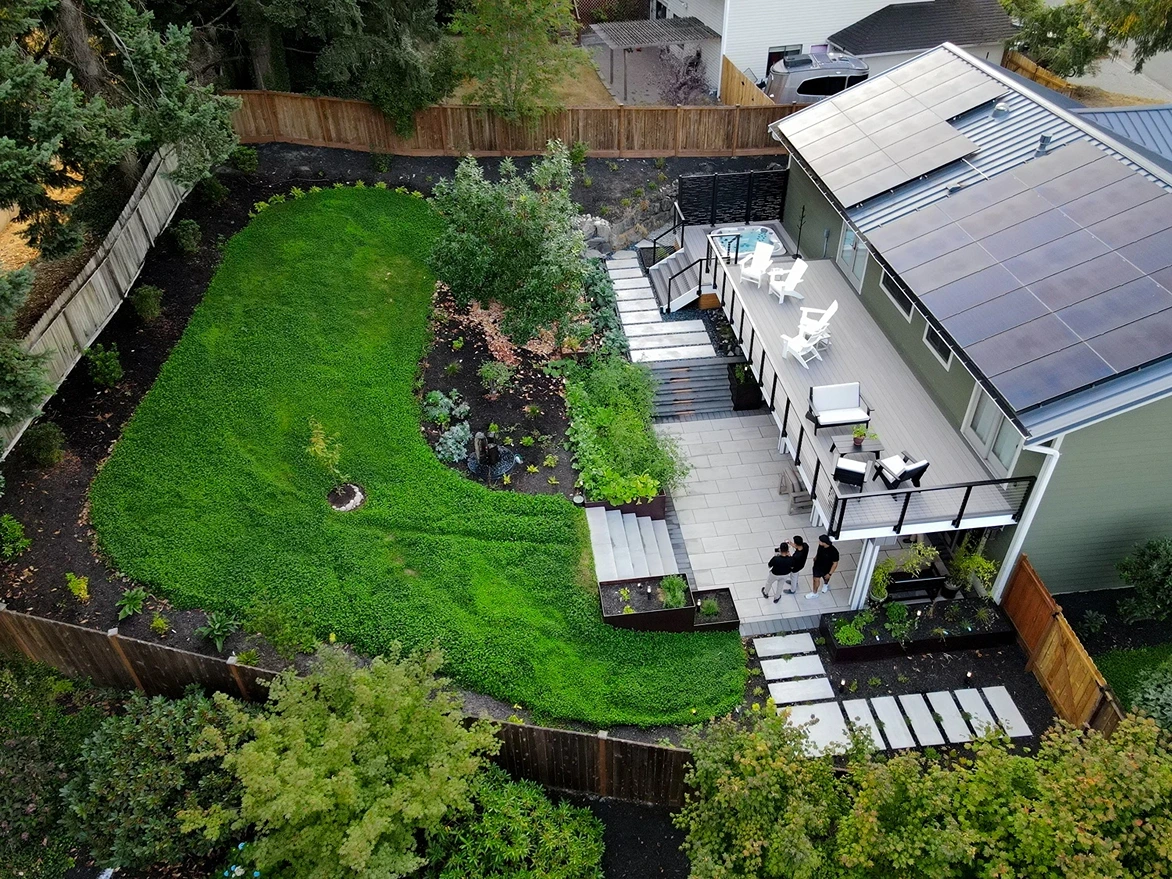
Lots near Bear Creek and along the Rose Hill corridor deal with both slope and proximity to critical areas. These properties often require additional environmental review for any grading or wall construction that falls within buffer zones.
Angkorscape designs and builds sloped yard transformations across all of these Redmond neighborhoods, with engineering, permits, and drainage handled in-house as part of every project.
Landscaping a sloped yard in Redmond gives you something a flat lot never can: different levels, depth, and visual interest that make your outdoor space feel larger and more dynamic. The key is getting the structure, drainage, and planting right from the beginning.
Retaining walls for sloped yards, proper grading, and deep-rooted plants work together to turn an unusable hillside into a backyard you actually use.
Redmond homeowners ready to explore what their slope can become can schedule a consultation to walk the property and talk through the options.


Landscaping a sloped yard in Redmond typically involves a combination of retaining walls, terracing, proper yard grading for drainage, and strategic planting with deep-rooted species. A professional assessment of the grade, soil, and drainage patterns determines which approach fits your specific lot.
A retaining wall is generally needed when the grade change exceeds two to three feet or when you want to create a level patio, seating area, or usable space. On gentler slopes, terracing with planted beds or boulder placement may be enough.
Creeping juniper, creeping phlox, and native kinnikinnick are among the best options for steep hillside landscaping in the Pacific Northwest. These plants spread quickly, root deeply, and require low maintenance once established.
Sloped yard projects vary widely with grade severity, wall height, materials, and drainage needs. Because retaining walls, grading, and drainage are structural work handled through design and permitting, cost depends heavily on scope.
Terraced backyard landscaping ideas for Redmond include multi-level patios connected by stone steps, hillside gardens with layered native plants, fire pit zones on lower tiers, and deck platforms at upper elevations. Each tier should have its own drainage solution to prevent water from cascading to the level below.

Serving Bellevue and the Eastside homeowners with custom outdoor living spaces. One process, one team, one result.
Contractors License : ANGKOI*750PA